01 — Restaurant and courier management
Kurjet
Brings Trendyol, Yemeksepeti and Getir orders into one panel, starts courier shifts on site by location and tracks each delivery live.
Read the case
We take your web, mobile and AI products from idea to launch. You work directly with the engineers who built Kurjet, Doksan9 and Woonzero.
Instead of a wall of client logos, we show the products we built ourselves. Nothing explains how we work better than these.
Brings Trendyol, Yemeksepeti and Getir orders into one panel, starts courier shifts on site by location and tracks each delivery live.
Read the caseReads a photographed invoice, waybill or weighbridge ticket with a vision-language model and splits it into fields; approved records go into a searchable archive.
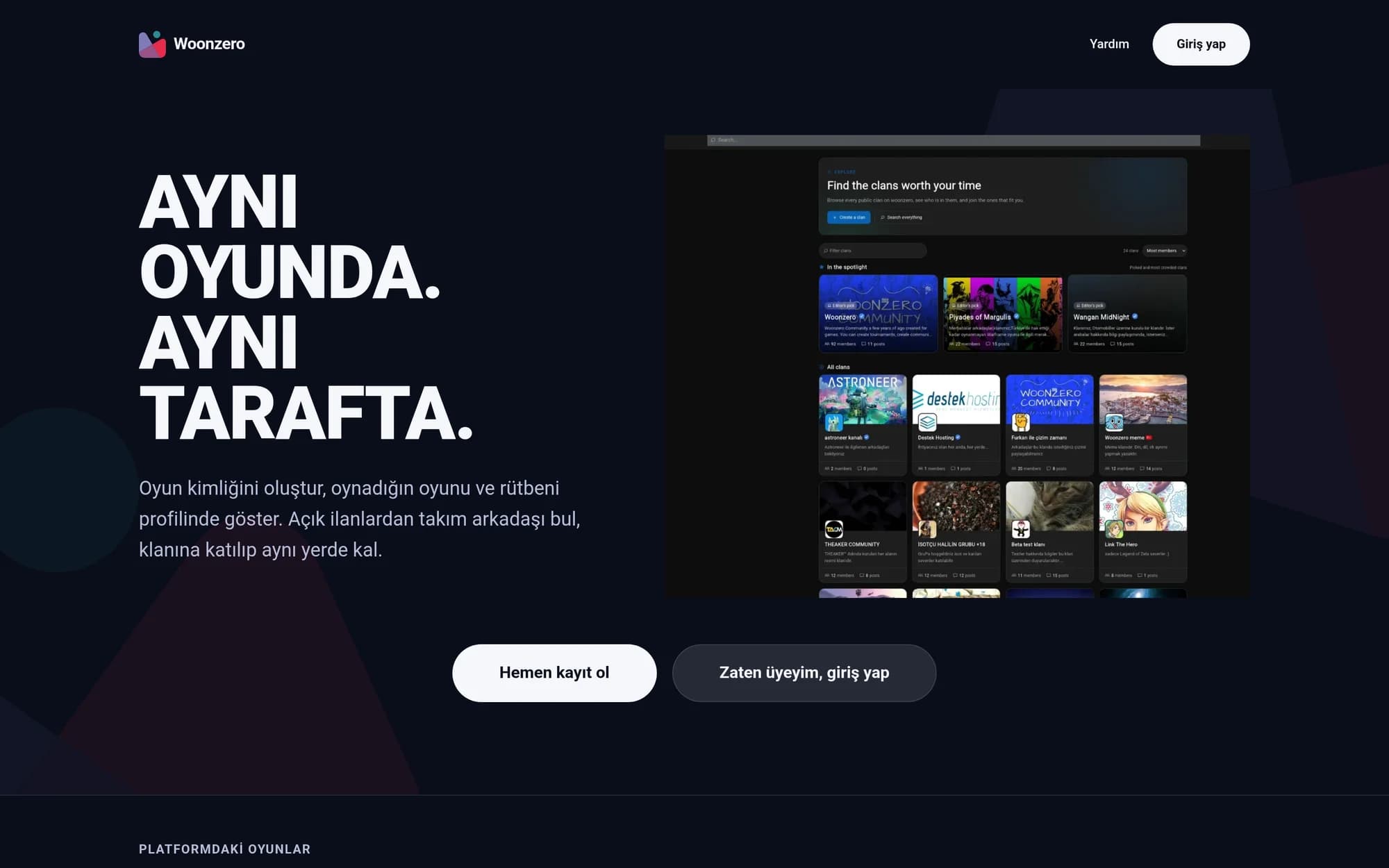
Read the caseA platform where players find people to play with, through gaming identities, team-finder posts and community guides.
Read the caseInvoices, waybills and weighbridge tickets each carry different fields; entering them all by hand is slow and error-prone.
Document formats vary widely and financial records can't carry mistakes; when the model gets it wrong, the user corrects it before anything is saved.
Send the image straight to a vision-language model, split it into fields, and put every result up for human approval before saving.
[Measured result: e.g. processing time per document, before → after. Remove this block if it wasn't measured.]
Doksan9's archive looks like a single search box. Four more layers run underneath it.
Interface, API, AI, data and infrastructure. We don't hand one layer to someone else and glue the rest together.
It arrives as a photo or a gallery pick; a vision-language model reads the fields directly out of the image, and once approved the record lands in a searchable archive.
Nothing is ever saved automatically; every result is shown to a person first. Documents carry personal data, so access control, masking and audit logs are written into every layer.
The layers come together and the product ships. We monitor it, update it and stay.
We listen to what you want to build.
Scope, flows and the technical plan.
A working version at regular intervals.
Going live, and what comes after.
The engineers who founded Cyber2Tech work on your project themselves. There's no account manager in between; you talk directly to the person writing the code.
We write down the scope and the out-of-scope for every service, clearly. We don't take on work we don't do.
We clarify the need in an intro call and share a draft scope and timeline within 48 hours.
We don't have a price list. Every project is different, so after the first call we write up the scope and prepare a proposal for that project.
A typical first version takes 4–8 weeks. We also run shorter discovery engagements.
React, Next.js, Node.js, Python, C# / .NET and AI APIs; AWS and Vercel in the cloud.
Your goal, how you'll measure success, and any existing documents or access. If those are ready, we can start within a business day.
Yes, we start every project under an NDA. Sensitive data is shared through secure channels.
Yes. We keep what we build running: an optional maintenance agreement, or improvement sprints.
Simple scenarios built on ready-made APIs take 2–5 days. Work that needs fine-tuning or a custom model takes longer.
You talk directly with the people working on your project; there's no account manager in between.